


An extract from Misinterpretation by Ledia Xhoga
‘His face seemed stuck in between expressions. It reminded me of an unfinished Rubik’s Cube we kept around the house, which I could never resist trying to solve’
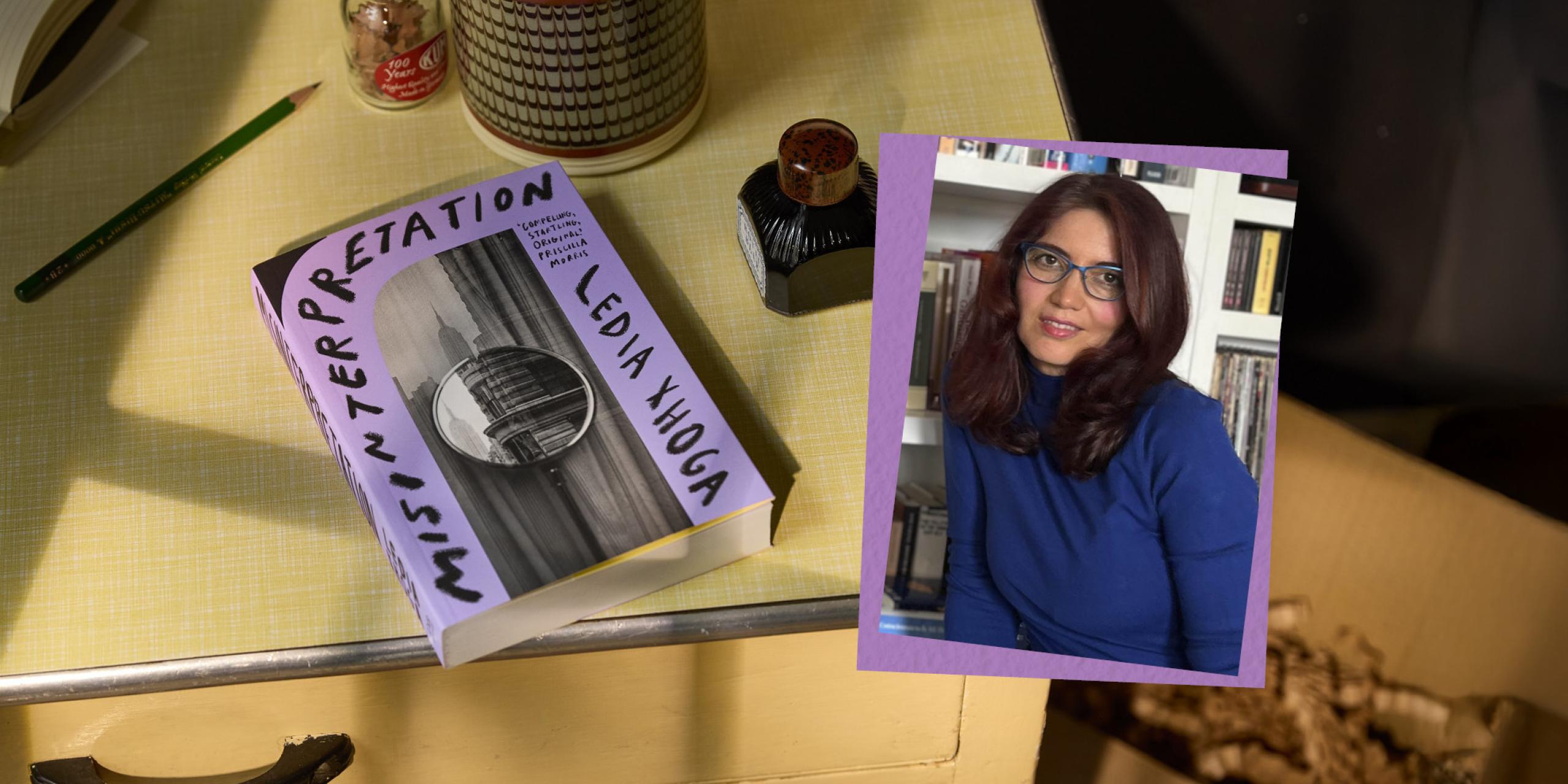
The author of Misinterpretation, longlisted for the Booker Prize 2025, talks about the book that made her walk into a lamppost, and the one with the most beautiful last sentence ever written
The inspirations behind my Booker-longlisted book
The main character in Misinterpretation is an unnamed Albanian translator and interpreter who works with immigrants. I have never worked professionally as an interpreter or translator, but I volunteered briefly for an organisation in New York City that asked me to interpret for a Kosovar Albanian whose background was similar to Alfred’s. Although we didn’t end up meeting, the situation stuck with me and inspired the first scene in the novel where the interpreter meets Alfred in Washington Square Park in Manhattan. The novel flowed after that scene. I took it as a sign that I was on the right track, that the story was ready to be told.
The book that made me fall in love with reading
I have a vivid memory of borrowing Roald Dahl’s The Big Friendly Giant from the library, reading it while walking home, and hitting a pole with my head. Hoping nobody noticed, I put the book away at once, but a second later a friend caught up with me. She was laughing hysterically. I enjoyed fantasy and adventure books, especially the ones that presented some moral dilemma or the fight against oppression.
The book that made me want to become a writer
Reading, at first, discouraged me from wanting to be a writer. As a child, when I’d read a book I particularly loved, I’d think – what a good deal I’m getting now. I’m sitting here doing nothing, yet I’m in this other world. The writer had to imagine everything, write lines and lines of dialogue and descriptions! I did enjoy writing poems and short prose for school assignments but never considered writing as a career. Much, much later on, I remember picking up Samantha Hunt’s The Seas and admiring the skill it took to create such deliberate, exquisite prose and starting to think of writing as a craft. To be clear, I did not think oh yeah, I can do that. I was infinitely more hesitant and intimidated. But it made me think about the possibility. And I still love her writing.
The book I read again and again?
Middlemarch by George Eliot. I’m a bit obsessed with Dorothea Brooke and how her pious empathy is a strong motivation in everything she does, whether it is improving the cottages of farmers in her uncle’s 19th-century English estate or marrying a gloomy and boring clergyman. I love the characters and their psychological complexity. The novel has humour, heart, and the most beautiful last sentence ever written, which almost makes me cry each time. Yes, I do find different things in Middlemarch every time I read it, especially when I’m part of a reading group – the discoveries multiply!
The book that changed the way I think about the world
Jenny Erpenbeck’s Go, Went, Gone. The main character in the novel is Richard, a widower and retired German academic living in Berlin who, instead of spending his now empty days reading Proust and Dostoyevsky, decides to interview African asylum seekers whose immigration status is stuck in bureaucratic limbo. The refugees he befriends have never even heard of Hitler, he discovers, and are unaware that there used to be a Berlin wall, a surprise to Richard and the reader. But the conversation made me reflect about media coverage and biases, and our lack of awareness of conflict and wars in Africa, from where the refugees were escaping. Richard doesn’t explain the truth about Hitler to the young man; he doesn’t want to add more burden to someone who has seen enough slaughter for a lifetime.
To be clear, I did not think oh yeah, I can do that. I was infinitely more hesitant and intimidated. But it made me think about the possibility. And I still love her writing
The book that changed the way I think about the novel
I’m currently in a reading group where we are reading Conversations in a Cathedral by Mario Vargas Llosa, of whom I’ve always been in awe. The novel offers a bird’s eye view of Peru during the years of Odria’s dictatorship by using one single conversation as a framework while other conversations from the past or the future intrude, creating a polyphony of events and characters that’s dazzling and sometimes dizzying (it helps to read it with a group). On top of that, Conversations in a Cathedral is also a juicy story and a murder mystery with some unforgettable scenes. Hats off to the master.
The book I’m reading right now
I’m reading Idra Novey’s novel Take What You Need, which alternates between two points of view, that of a stepmother and stepdaughter, whose loving relationship came to an end when the stepmother left the father. The more I read, the more poignant the title feels. The psychological wound the separation caused haunts the reader the same way as it does the women. From the start, the tug and pull of feelings in the face of unforeseen circumstances becomes visceral. The prose is restrained but extremely effective in showing how unbearable the weight of love can be.
The Booker-nominated book everyone should read
Ismail Kadare’s The Traitor’s Niche. The novel works as a symphony of related narratives, achieving a surreal yet cohesive portrayal of a national rebellion against the Ottoman empire. The main attraction in a popular square in Constantinople is a niche containing the severed heads of rebel viziers. An imperial courier tasked with transporting the severed heads generates supplemental income with a side show. A Turkish general has to defeat and decapitate Ali Pasha, the rebel Albanian ruler, to save his own skin (well, head, really). The Traitor’s Niche was published in 1978 in Albania, banned by the communists, then longlisted for the International Booker in 2017.
Where and when I most like to write, and the tools I need
I always write on my laptop but take notes in my phone during the day. I like to sit near a window so I can rest my eyes outside. I make a cup of tea before I start writing. I prefer silence. Sometimes I’ll turn on a black and white movie and let it play on mute. Alfred Hitchcock’s movies are the best for background images.
My dream book club, what we’d read, and where we’d meet
In my dream book club I would invite Dorothy Parker, Edith Wharton, Julia Louis-Dreyfus, and Aubrey Plaza – they are all inimitable and fabulous. It’s a chilly fall evening but we’ve made a roaring fire in the woods. We’re roasting chestnuts, drinking something warm and discussing The Portrait of a Lady by Henry James. From what I’ve read Dorothy Parker had some strong feelings about Henry James’ prose so she will take the lead.


