

What winning the International Booker Prize means, according to previous winners
As our readers vote The Vegetarian their favourite International Booker Prize winner of the last decade, winning authors, translators and publishers reflect on the impact of world’s most influential award for translated fiction
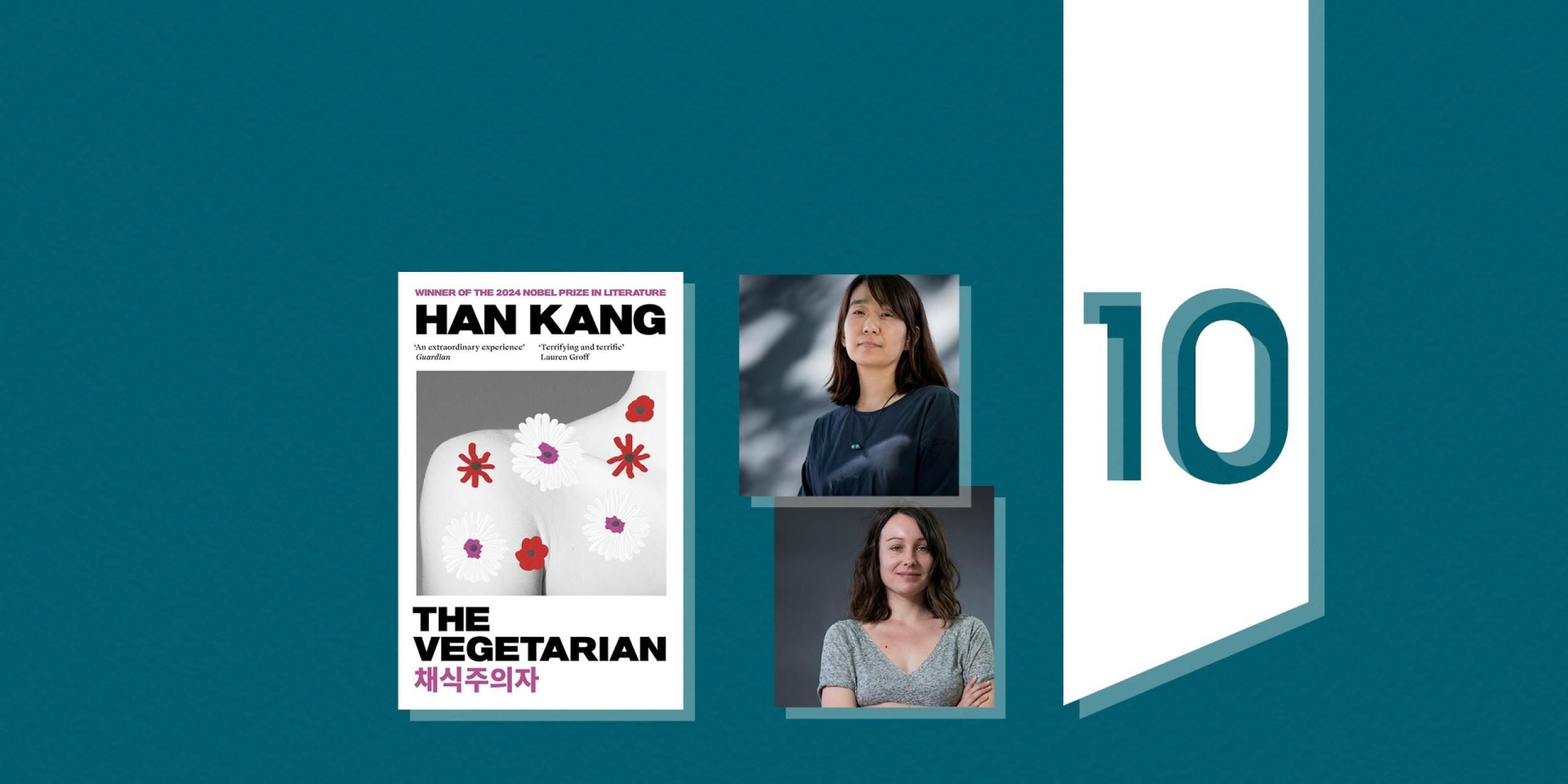
As part of our celebrations to mark the 10th anniversary of the International Booker Prize, we recently asked you which winning book from the past decade of the International Booker Prize was your favourite. Just under 10,000 of you voted in our poll, with The Vegetarian coming out on top, after securing almost a third of the votes.
Written by Han Kang and translated from Korean into English by Deborah Smith, The Vegetarian won the International Booker Prize in 2016, the first year of the prize in its current form. The English translation was edited by Max Porter and published by Portobello, an imprint of Granta.
As well as voting, many of you also told us what you loved most about your chosen book. Here are just a handful of reasons why The Vegetarian is your favourite:
‘Among your list of truly extraordinary books, The Vegetarian stands slightly apart because of its daring and sharp questioning of ideologies linked to gender, consumption, human-centred thinking, and of course vegetarianism’ – Carmela
‘I first read The Vegetarian in college and it immediately became one of my favourite books. Social expectations, submission, madness, autonomy. This book truly shaped the kind of fiction I seek out now’ – Catherine
‘One of the most courageous depictions of the way misogyny, family and domestic violence intertwine. Spare but uncompromising prose and a powerful use of anger in literature. Brilliant’ – Tony
‘The first time I read The Vegetarian was in one sitting. I was mesmerised; the translation is excellent. It’s a beautiful and bizarre novel that leaves the reader meditating on life, trauma, fragility and ultimately what it means to be human. It also was my introduction to Han Kang. I’ve since read all her works that have been translated into English’ – Lisa
As we look back at the prize’s history, we caught up with some of the prize-winning authors, translators and publishers from across the last decade, to explore the impact they think the award has had.
We asked the authors and translators to think back to the moment they won and how it felt, and to tell us about the influence it’s had on their careers since. And we asked publishers how the International Booker has shaped the market for translated fiction. This is what they said.
Buy the book

Deborah Smith, translator of The Vegetarian (2016 winner)
‘I think I felt relieved – I was still a student at the time, and it was a lot of money. I cried.
‘The Booker was a huge story for the Korean press, and resulted in huge print runs for the original, as well as triggering conversations about the cultural politics of prizes, and of translation.
‘As to the impact on my career, it’s difficult to separate out one event, even one as big as this, and say X caused Y. All the more so because it happened at the very beginning of my career. But it was a level of visibility that I wasn’t prepared for. Perhaps a slow and steady start might have made for a more sustainable career.’
Han Kang, author of The Vegetarian (2016 winner)
‘I wrote The Vegetarian between 2003 and 2005, and published it as a full-length novel in 2007. The three years I spent writing [it] was a difficult time for me, and I never imagined that it would one day find so many readers. At the time, I was not sure if I would be able to finish the novel, or even survive as a writer.
‘I remember thinking that it was rather strange (in a good way) to win the International Booker Prize in 2016, more than a decade later. I’m grateful that the International Booker Prize has invaluably helped my works to reach a wider readership in different cultures.’
Bella Lacey, Managing Director and Publishing Director at Granta, publisher of winning novels The Vegetarian (2016) and Kairos (2024)
‘If booksellers were once nervous about the appetite for works in translation, the International Booker-effect on sales has proved definitively that readers are hungry for good writing, no matter its original language.
‘At Granta, we are lucky enough to have published two winners and have first-hand experience of how the reputation and impact of the International Booker Prize has grown over the past 10 years.
‘In 2016, Han Kang’s The Vegetarian was awarded the first International Booker Prize in its current form and the scale of the global response perhaps took everyone a little by surprise. By the time Granta’s Kairos by Jenny Erpenbeck won in 2024, the expectation of international excitement was well established – though no less enjoyable and gratifying.
‘Seeking out the most original and interesting works in translation has always been a core part of Granta’s publishing, reflecting our enduring belief in its cultural importance and commercial potential… In a sometimes divided and dangerous world, offering space to voices from other lands can feel like a necessary act of sanity and grace.’

Translator Deborah Smith and author Han Kang, winners of the International Booker Prize 2016 for The Vegetarian
© Janie Airey/Booker Prize FoundationJokha Alharthi and Marilyn Booth, author and translator of Celestial Bodies (2019 winner)
Marilyn Booth: ‘There’s a wonderful word in Arabic, impossible to translate succinctly into English: tarab. It means the ecstasy one feels listening to music, being in the moment and both a bit lost and very there. That’s the best way I can describe what it felt like.’
Jokha Alharthi: ‘There’s a wonderful word in English: awestruck. It was a moment to speak – to celebrate – and to congratulate Marilyn and the publisher and to thank family and friends, but it was also a moment to try to take it all in! So, as Marilyn says, tarab – in the moment, a bit lost, very there.’
Marilyn Booth: ‘I think it was important not only for audiences reading the novel in translation(s), but also in the Arab world – it was the first (and still the only) Arabic novel to win the prize, but also, it really focused eyes on Oman, which is not one of the historic centres of Arabic fiction production. Sales of the novel in Arabic shot up, after the prize. And young writers in Oman and elsewhere in the Gulf region told me that it was a great encouragement to them. Of course, it’s important to recognise that there is already a great readership for fiction across the Arab world – that doesn’t require prizes.
‘In terms of Arabic fiction in the world, the prize helped to create space for the circulation in translation of Jokha’s other brilliant novels, and I hope it spurred readers to explore the fabulous world of contemporary Arabic literature in translation.’
Jokha Alharthi: ‘It was a pleasure to bring a fictional version of aspects of Omani life to readers in Auckland, in Edinburgh, in California, and to see the book appear in different languages. Celestial Bodies existed in English and in Arabic only at the time of the prize announcement, so translations elsewhere followed afterwards.
‘Talking about the characters in my novel and imagining them coming alive in the small towns of Italy, Mexico, or India made me more certain of the immense role literature plays in our world. Literature, by way of these dialogues, acts not merely as an art form, but as a bridge: it teaches us to understand one another, and, more importantly, to empathise with each other.’

2019 International Man Booker Prize winners Jokha Alharthi and Marilyn Booth
Michele Hutchison, translator of The Discomfort of Evening by Lucas Rijneveld (2020 winner)
‘Lucas and I won the prize during one of the Covid-19 lockdowns, which was a very strange period. It meant that we had to go to the offices of the Dutch publisher, sit two metres apart and could only bring one other person. I brought along my son. The announcement and the event for Edinburgh festival were via a video call, which was a shame since it didn’t quite feel real. I would have loved to have received the prize in person and celebrate it with everyone involved in publishing the book.
‘I was surprised and thrilled that the book had won, it hadn’t been an easy one to translate. Afterwards, there was a lot of attention in the Dutch press. Since then, I’ve been approached by many other Dutch authors to translate their work. It was a boost to my translation career in that sense. More importantly, the prize contributes greatly to the visibility of translated literature in the UK.’
David Diop, author of At Night All Blood is Black (2021 winner)
‘It is clear that the International Booker Prize gave At Night All Blood is Black an aura of international visibility. For example, the English translation led to translations into Tamil, Turkish, Yoruba and Farsi that would not have come to pass without the award’s prestige.
‘My career as a writer has also taken on new dimensions. The International Booker is an example of what Pierre Bourdieu calls a ‘legitimizing instance’ (‘Instance légitimante’), recognised the world over. As a result, I now have the good fortune of being considered a real writer, something I had for so long hesitated to claim for myself.’
Anna Moschovakis, translator of At Night All Blood is Black (2021 winner)
‘I have been delighted to see so many translations of the book roll out, and to continue to field questions from libraries, reading groups, and students writing papers and dissertations. This ongoing exposure surely has much to owe to the prize, which I hope has also directed readers to David’s subsequent, very different but equally wonderful, novels.
‘For my own career, I don’t have much of an answer. Translation is one of the things I do, alongside writing, teaching, and other culture and community work. The award hasn’t altered my sense of hovering at the edges of the literary translation world, though it has created many happy opportunities for me to discuss At Night All Blood is Black with strangers in various circumstances, after they have seen or read my name and made the connection.’
Adam Freudenheim, Publisher and Managing Director at Pushkin, publisher of At Night All Blood is Black
‘The International Booker Prize has had an enormous impact on the translated fiction market, as the reach of the Prize is truly unrivalled. Simply by existing and drawing regular national and international attention to fiction in translation it has done a great service to the publishing industry and has no doubt led to books being translated that might never have been translated before.
‘What’s wonderful about a prize like the International Booker is that it leads to longlisted, shortlisted and winning titles being promoted by booksellers, reviewed more widely by the press, and ultimately being read by far more readers.
‘Pushkin Press has always focussed on translating literature from around the world – it’s in our DNA, with about three quarters of our books in translation… There’s no doubt that the titles shortlisted for the prize – and particularly our winner At Night All Blood is Black – have benefited hugely from the attention and that has definitely increased their visibility within the publishing house too.
‘Prior to the launch of the International Booker there was no truly international annual prize for translated fiction. Having an annual prize in this area is important to everyone working on translated fiction.’

At Night All Blood Is Black, by David Diop, winner of the International Booker Prize 2021
© David Parry/PA MediaGeetanjali Shree, author of Tomb of Sand, translated by Daisy Rockwell (2022 winner)
‘Thousands of people [in India] got up at 2 or 3am to watch the ceremony live… I found that very moving. They were not my family or friends, just people who love literature and the language and had so much investment in it. They were completely ecstatic…
‘[My mother] is 96 now and was so delighted. One of the biggest moments for me, bigger even than when the Booker was announced, was when my mother gave me a hug and said: “I knew one day you would reach here.” That meant everything to me.’
‘The thing I realised is that just before the Booker happened for me were the pandemic years… Slowly, many of us were going into a depression, not only because of the anxiety about the pandemic but about all the other things that were happening; the politics of the world, which were creating borders, making people suspicious of each other and so much more unfriendly.’
Winning the International Booker Prize with Daisy Rockwell ‘returned a world of literature to me…Suddenly, my world expanded and it was all about readers and writers and books again. It was life-affirming for me, to know that while many things may be going wrong there are still these things to celebrate and there are people who are totally immersed in literature…
‘My connection with literature really has become so much more intense after winning the International Booker Prize.’

Translator Daisy Rockwell and author Geetanjali Shree, winners of the 2022 International Booker Prize for the novel Tomb of Sand
© David Parry/PAGeorgi Gospodinov, author of Time Shelter (2023 winner)
‘In those few hours at Sky Garden [the venue for the 2023 ceremony in London], we went through every emotional register – from excitement and hope to a quiet acceptance that it was probably not going to be us, but that we had still made it this far. At the table next to me sat a journalist from the New York Times who had begun his career writing those pre-prepared obituaries for living authors. We joked that if we won the Booker that evening, I would already have a reserved place on the paper’s obituary page and that he would be the one to write it. When Leïla Slimani announced the winners, I think I needed another second or two to process what I had heard. Luckily, Angela Rodel was the first to jump up and shout with joy – we hugged and made our way to the stage. It happened on the eve of the most beautiful Bulgarian holiday – the celebration of the alphabet.
‘In short [after winning] it became harder to find a hiding place and time to write, and easier to find a doctor or to be served more quickly at the local post office. My books had been translated even before the award—that is, the door had already been slightly ajar—but after the Booker it swung wide open, and there were people waiting on the other side: curious readers, journalists who struggled with that long name ending in “-ov.”
‘The world can be told in all languages. That is what this prize says. That, it seems to me, is its miracle – to get literature in the top news, to hold a book up high like a shield against disintegration and the erosion of meaning.’
Angela Rodel, translator of Time Shelter (2023 winner)
‘Winning felt absolutely shocking – a Bulgarian book had never even been nominated before, let alone made it to the shortlist, so I already felt that we had “won” just by making it that far. Thank goodness my friend and fellow translator Jeffrey Zuckerman had urged us to write our acceptance speeches “just in case” – which goes against the strong Bulgarian superstition that doing so would jinx our chances! – because when Leila Slimani announced our book, I literally screamed in delighted surprise (that shriek that can be heard on the video is me). I was so stunned that my prewritten speech came in very handy, as I’m not sure I would have been able to string together a sentence in my excitement.
‘Winning the International Booker has not only made Time Shelter and all of Georgi’s work far more visible, cementing his place as one of the most important European writers of his generation, but it has also helped Bulgarian literature as a whole enormously.
‘For the previous 15+ years, pitching Bulgarian literature to publishers as a translator was a steep uphill battle, since it was unfamiliar and thus seemed “risky” to publishers and readers alike; Time Shelter has put the country on the map as the home of interesting and impactful literary voices, which has increased interest in Bulgarian writers, especially from the younger generation.
‘I am absolutely thrilled to see the brilliant Rene Karabash and her amazing translator Izidora Angel on the Booker short list this year – I told them to get their acceptance speeches ready in advance, as She Who Remains, while a very different book from Time Shelter, is yet another example of world-class, Booker-worthy literature from Bulgaria!’

Author Georgi Gospodinov with translator Angela Rodel after winning the International Booker Prize 2023
© David ParryJenny Erpenbeck, author of Kairos (2024 winner)
‘I was seriously prepared to not win the prize as one should be. So when the winner was announced I simply didn’t recognise the word ‘Kairos’ or grasp what was happening. It was only when I saw the excited faces around me that I understood that it must be us who had won. It felt unreal…
‘The book was sold out the first day after the prize announcement. And the sales went on and on for almost the whole year. People would congratulate me on the street. For some media it came as a big surprise. How could it be that someone from the former East won this prestigious prize? The German media are mostly run by Westerners, so there’s generally less interest in specific East German subjects, especially when they suspect us of undermining the common narrative of having been “saved” by the unification.’
Michael Hofmann, translator of Kairos (2024 winner)
‘I think everyone at the table clocked it before I did. I’m still caught in the moment before, people are looking at me, and jumping up and running and shouting, and I’m thinking: What are they doing? What’s this about? At the same time, I think, by rights, yes. To me, the book felt like a proper winner; Jenny’s reviews were extraordinary. I didn’t think I was participating at a travesty, in other words…
‘I actually think prizes are everything. There’s no life without prizes. I like to say. In my lifetime, the graph of creative people has had the mid-range taken out of it, and there are highs and (mostly) lows.’

Jenny Erpenbeck and Michael Hofmann at the International Booker Prize 2024 ceremony at Tate Modern, London
© David Parry/Booker Prize FoundationBanu Mushtaq, author of Heart Lamp (2025 winner)
‘The moment of winning was surreal, exhilarating, heartening and profoundly humbling all at once A wave of joy and disbelief swept over me, as if years of quiet effort and dedication to my writing had finally been brought into the light. It was deeply moving to witness these long held stories recognised and celebrated by the world
‘I continue to live and work as I always have, rooted in my work, my people, and the my writing. What has changed is the reach of my stories; voices that once travelled slowly now cross borders with ease. The responsibility feels heavier than the celebration, as it adds to my daily routine, with increased literary events, sessions and lot more social work. I am more conscious that every word I write now carries not just a personal truth, but the weight of many unheard lives.’
Deepa Bhasthi, translator of Heart Lamp (2025 winner)
‘I am not sure if I have the requisite distance from the ceremony yet to articulate what it felt like to win that evening. As of now, I look back at May 2025 with a sense of wonder, a bit of disbelief, and some amount of “what just happened!?”
‘That said, it has been quite the ride this past year, brimming with wonderful friends and colleagues old and new, experiences and opportunities and travel that have all been such gifts on a personal and professional level. There has been a good deal of unlearning as well, in ways generous, and in ways not so kind and graceful. These have been necessary gifts too.
‘I love that my translation is being read, and hopefully enjoyed across the world. I love that I get to talk about the magic of my language Kannada, about my English, with people who could not be more different from me and my lived experiences, only to realise that we are all more similar than we are not.
‘It has been a physically and emotionally tiring year of thinking about languages, yet, I have only fallen again and again, and deeper, in love with literature and with my inescapable need to write. I am very excited for how all this is shaping my career, and for the journey ahead.’
Stefan Tobler, And Other Stories, publisher of Heart Lamp
‘Since the last decade’s rise of xenophobia (let’s say since Trump’s first calls for a wall and lead-up to Brexit), there’s been a sudden and palpable thirst for literature in translation. The International Booker Prize more than any other event has harnessed that thirst and in the past years raised translated fiction to a prominence we’d not have guessed at a decade ago.’

2025 winners Banu Mushtaq and Deepa Bhasthi holding their International Booker Prize trophies
© David Parry for the Booker Prize Foundation

